
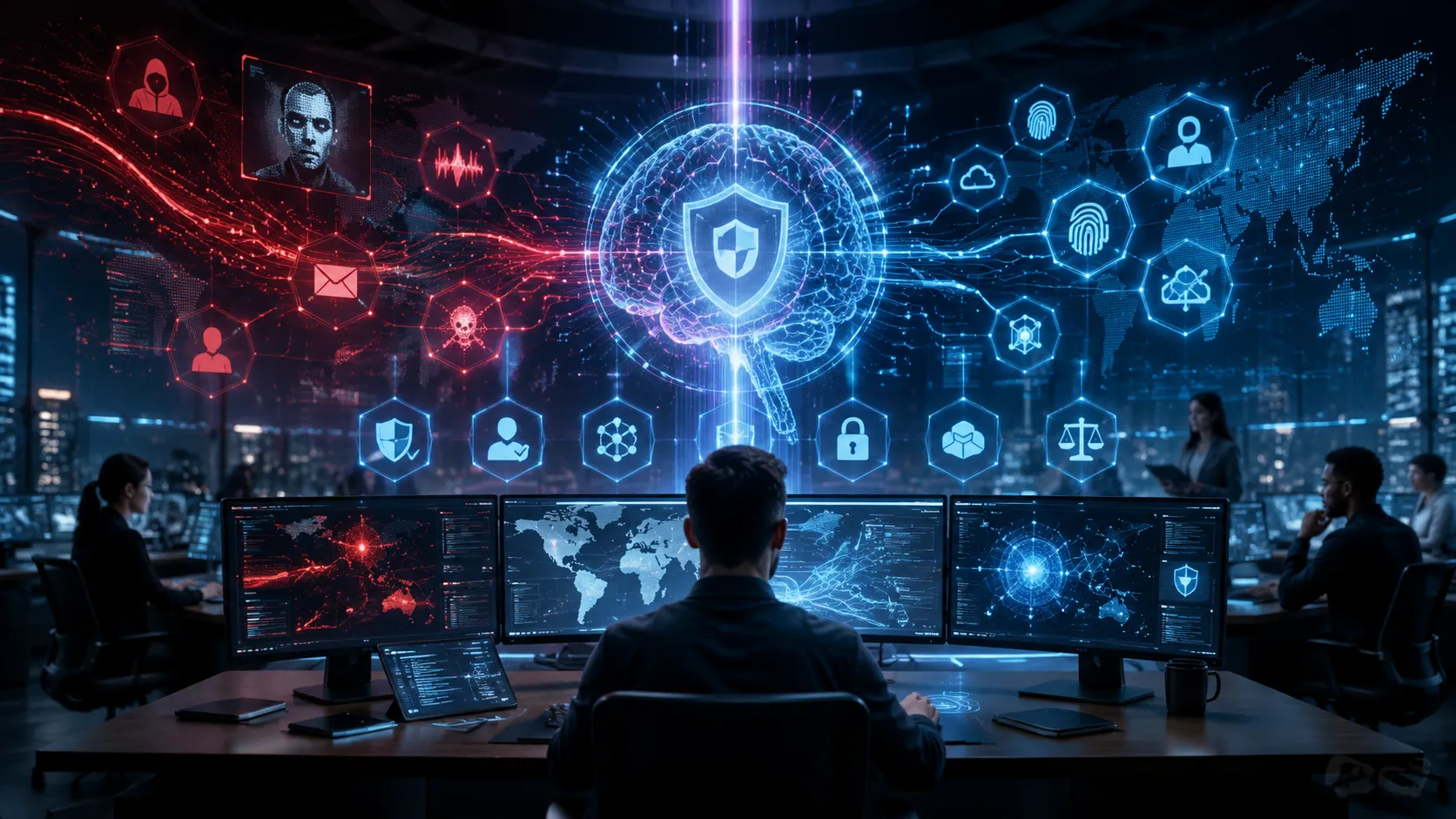
Cybersecurity training used to be relatively simple. Teach employees not to click suspicious links. Remind them to use strong passwords. Run an annual awareness session, collect attendance sheets, and move on. Unfortunately, cybercriminals didn’t stay still. Today, artificial intelligence has transformed the threat landscape in ways many organizations are only beginning to understand. Phishing emails can now be generated in seconds. Deepfake voices can impersonate executives with alarming accuracy. AI-powered malware adapts to security controls and changes behavior faster than traditional defenses can react.
The uncomfortable truth is that even the best security technology can fail if employees are unprepared. That’s why training staff for AI-driven cyber threats has become one of the most important priorities for modern businesses. Corporate readiness is no longer just about having firewalls, antivirus software, or sophisticated monitoring tools. It’s about ensuring people can recognize, understand, and respond to a new generation of intelligent attacks. Organizations working with cybersecurity innovators like TechnaSaur are increasingly realizing that employee awareness may be one of the strongest defenses available. The challenge isn’t simply teaching staff about cybersecurity anymore. It’s teaching them how cybercrime itself has evolved.
Why AI Has Changed the Cybersecurity Training Conversation
For years, many cyberattacks followed predictable patterns. A poorly written phishing email arrived in someone’s inbox. A suspicious attachment appeared from an unknown sender. Employees could often spot obvious warning signs without much difficulty. AI has changed that equation. Modern attackers use generative AI to create highly convincing messages that mimic writing styles, communication patterns, and even company branding. Some phishing emails now contain better grammar and formatting than legitimate business communications.
Think about that for a moment. Employees are no longer spotting attacks because they look suspicious. They’re identifying attacks because they understand context, behavior, and subtle inconsistencies. That’s a much higher skill level. As a result, cybersecurity awareness programs must evolve beyond traditional checklists and outdated training videos. Corporate readiness now requires continuous learning, real-world simulations, and practical experience dealing with AI-enhanced threats.
The Human Factor Remains the Biggest Target
Despite major advances in cybersecurity technology, attackers still focus heavily on people. Why? Because humans are often easier to manipulate than software. Cybercriminals understand that breaching a system through technical vulnerabilities can be difficult. Convincing an employee to reveal information, however, may only require a well-crafted email or a convincing phone call. AI has made social engineering dramatically more effective.
Attackers can analyze public information, social media activity, and business websites to create personalized attacks that feel legitimate. An employee receives a message that appears to come from their manager. The writing style matches previous emails. The request sounds urgent. The language feels authentic. Without proper training, even experienced professionals can be deceived. This is why companies like TechnaSaur emphasize human-centered security strategies rather than relying exclusively on technology.
Understanding AI-Powered Threats Employees Must Recognize
Effective training begins with understanding the threats employees actually face. Many workers still associate cybercrime with viruses and suspicious downloads. While those threats still exist, AI-driven cyber threats attacks are becoming increasingly sophisticated. Some of the most common examples include:
AI-Generated Phishing Emails
Generative AI allows attackers to create highly personalized phishing campaigns at scale. Instead of sending one generic email to thousands of people, criminals can create unique messages tailored to individual employees. The result is a significantly higher success rate.
Deepfake Voice Scams
One of the fastest-growing threats involves AI-generated voice cloning. Attackers can replicate a manager’s voice using publicly available audio clips and use it to request sensitive information, financial transfers, or system access. What sounds impossible today is already happening in organizations around the world.
AI-Assisted Business Email Compromise
Business Email Compromise (BEC) attacks have existed for years, but AI has made them more convincing. Attackers can study communication patterns and generate realistic responses that blend seamlessly into ongoing conversations. Employees may not even realize they’re communicating with an attacker.
Intelligent Malware
Modern malware increasingly incorporates AI techniques to avoid detection. Instead of behaving predictably, it can adapt to security environments and change tactics when monitored. This makes rapid detection and employee reporting even more important.
Why Traditional Security Training No Longer Works
Let’s be honest. Most employees don’t enjoy cybersecurity training. Many organizations rely on annual presentations filled with technical jargon, outdated examples, and generic advice. Employees attend because they have to. Then they forget most of what they learned within a few weeks. That approach was already struggling before AI entered the picture. Regular AI-Driven Cyber Threats Training helps employees stay updated on the latest AI-based threats. Now it’s largely ineffective. Corporate readiness requires training programs that feel relevant, practical, and engaging. Employees need scenarios that reflect the threats they’re likely to encounter today, not five years ago. The most successful organizations are shifting toward interactive learning experiences that focus on real-world decision-making rather than memorization. That’s a significant difference. People remember experiences far better than slides.
Creating a Cybersecurity-Aware Culture
Training should never be treated as a one-time event. Cybersecurity awareness works best when it becomes part of organizational culture. Employees should feel comfortable reporting suspicious activity without fear of blame or embarrassment. This matters more than many leaders realize. In some organizations, staff hesitate to report mistakes because they’re worried about consequences. Unfortunately, delayed reporting often gives attackers more time to operate. Creating a culture where employees quickly report concerns can significantly reduce damage from cyber incidents. Companies partnering with TechnaSaur often focus on fostering this proactive mindset across all departments, not just IT teams. Cybersecurity isn’t solely an IT responsibility anymore. It’s a business-wide responsibility.
Practical Training Strategies for AI-Driven Cyber Threats
So what does effective cybersecurity training actually look like? Several approaches consistently produce better results than traditional awareness programs.
Simulated Phishing Exercises
Realistic phishing simulations help employees recognize suspicious messages in a controlled environment. Instead of merely discussing threats, employees experience them firsthand. When mistakes occur, they become learning opportunities rather than security incidents.
Deepfake Awareness Workshops
Most employees have never encountered a deepfake attack. Training should include examples of AI-generated audio and video manipulation so staff understand how convincing these attacks can be. Awareness alone can dramatically improve skepticism and verification practices.
Role-Based Security Education
Different departments face different risks. Finance teams may encounter payment fraud attempts. Human resources staff handles sensitive personal data. Executives face targeted social engineering campaigns. Training should reflect those realities. Generic programs often fail because they ignore role-specific threats.
Incident Response Drills
Organizations regularly conduct fire drills. Why not cybersecurity drills? Practicing response procedures helps employees react calmly and effectively during real incidents. Preparation reduces panic. And panic often leads to poor decisions.
Leadership’s Role in Corporate Readiness
Cybersecurity training cannot succeed without leadership support. Employees pay attention to what leaders prioritize. If executives treat security awareness as an afterthought, staff will likely do the same. Conversely, when leadership actively participates in training and promotes security best practices, employees are far more likely to engage. Corporate readiness starts at the top. Effective AI-Driven Cyber Threats Training reduces the risk of phishing, deepfake, and social engineering attacks. Leaders don’t need to become cybersecurity experts. They simply need to demonstrate that security matters. Organizations working with TechnaSaur frequently discover that executive involvement significantly improves employee participation and long-term awareness outcomes. Culture follows leadership. That principle applies to cybersecurity just as much as any other business function.
Measuring Training Effectiveness
One common mistake organizations make is measuring attendance instead of effectiveness. Just because employees completed training doesn’t mean they learned anything. Meaningful metrics might include:
- Phishing simulation success rates
- Employee reporting frequency
- Response times during security exercises
- Security awareness assessment scores
- Reduction in human-error incidents
These measurements provide a clearer picture of organizational readiness. Cybersecurity training should be treated like any other business investment. Results matter. Continuous improvement matters. Data matters. Without measurement, organizations are essentially guessing.
The Cost of Not Training Employees
Some organizations still view cybersecurity training as an expense rather than an investment. That perspective can become extremely costly. The financial impact of successful cyberattacks extends far beyond immediate recovery costs. Businesses may face:
- Operational disruption
- Regulatory fines
- Legal expenses
- Customer attrition
- Brand reputation damage
- Loss of intellectual property
Many of these consequences originate from human error. An employee clicks a malicious link. A fraudulent payment request gets approved. Sensitive information is accidentally shared. These incidents often begin with a single decision. Proper training helps employees make better decisions under pressure. And those decisions can save organizations millions.
Technology Alone Isn’t Enough
It’s tempting to believe advanced cybersecurity platforms can solve every problem. They can’t. Even the most sophisticated AI security tools have limitations. Technology detects threats. People make judgments. Technology generates alerts. People determine context. Technology can block attacks. People decide how organizations respond. This is why the future of cybersecurity isn’t about choosing between technology and employees. It’s about strengthening both.TechnaSaur and similar cybersecurity innovators increasingly focus on this balanced approach, combining advanced AI-powered protection with continuous workforce education. The strongest defense is a partnership between intelligent systems and informed people. Neither works as effectively alone.
The Future of Workforce Cybersecurity Training
Looking ahead, cybersecurity training will likely become more personalized, adaptive, and continuous. AI itself may help identify employee knowledge gaps and deliver customized learning experiences. Training programs could evolve based on individual risk profiles, job responsibilities, and previous performance. Ironically, the same technology attackers use may also help organizations defend themselves more effectively. The key is staying proactive. Cyber threats evolve constantly. Training must evolve, too. Organizations that treat cybersecurity awareness as an ongoing process rather than an annual requirement will be better positioned to handle emerging risks. And in an era where AI-driven cyber threats attacks continue to grow in sophistication, preparedness may become one of the most valuable competitive advantages a business can have.
Final Thoughts:
AI-driven cyber threats are changing the rules of cybersecurity. Attackers now have access to tools that generate convincing phishing emails, create realistic deepfakes, automate social engineering campaigns, and adapt malware behavior at unprecedented speed. Technology remains essential, but technology alone cannot solve the problem. Employees remain the first line of defense and, unfortunately, often the first target. Organizations that invest in meaningful cybersecurity education, realistic simulations, and a culture of security awareness will be far better prepared for the challenges ahead. Companies like TechnaSaur understand that corporate readiness isn’t just about deploying smarter tools. It’s about building smarter teams. Because at the end of the day, cybersecurity isn’t only a technology challenge. Organizations are now investing in AI-Driven Cyber Threats Training to improve overall cybersecurity awareness. It’s a human one. And the organizations that recognize that reality today will be the ones best equipped to face tomorrow’s AI-powered threats.
Frequently Asked Questions (FAQ)
1. What are AI-driven cyber threats?
AI-driven cyber threats are attacks that use artificial intelligence to automate, enhance, or personalize malicious activities. Examples include AI-generated phishing emails, deepfake scams, intelligent malware, and automated social engineering attacks.
2. Why is employee training important for AI-related cybersecurity risks?
Employees are often the primary targets of cybercriminals. Proper training helps staff recognize sophisticated attacks, verify suspicious requests, and respond appropriately before incidents escalate into serious security breaches.
3. How often should organizations conduct cybersecurity training?
Cybersecurity training should be continuous rather than annual. Regular awareness sessions, phishing simulations, workshops, and incident response exercises help employees stay informed about evolving threats.
4. Can AI security tools replace employee cybersecurity training?
No. AI security tools provide powerful detection and monitoring capabilities, but employees still play a critical role in identifying suspicious activity, making decisions, and following secure practices. Both technology and training are necessary for effective protection.
5. How does TechnaSaur support corporate cybersecurity readiness?
TechnaSaur helps organizations strengthen cybersecurity through AI-powered security solutions, threat detection capabilities, and strategies that combine advanced technology with workforce education to improve overall cyber resilience.