Artificial Intelligence has rapidly become a core part of modern business operations. From automated customer support and cybersecurity monitoring to code generation and enterprise analytics, AI systems are now deeply integrated into corporate environments. While these technologies offer speed, scalability, and efficiency, they also introduce a growing concern that many organisations are still struggling to address properly: AI hallucinations.
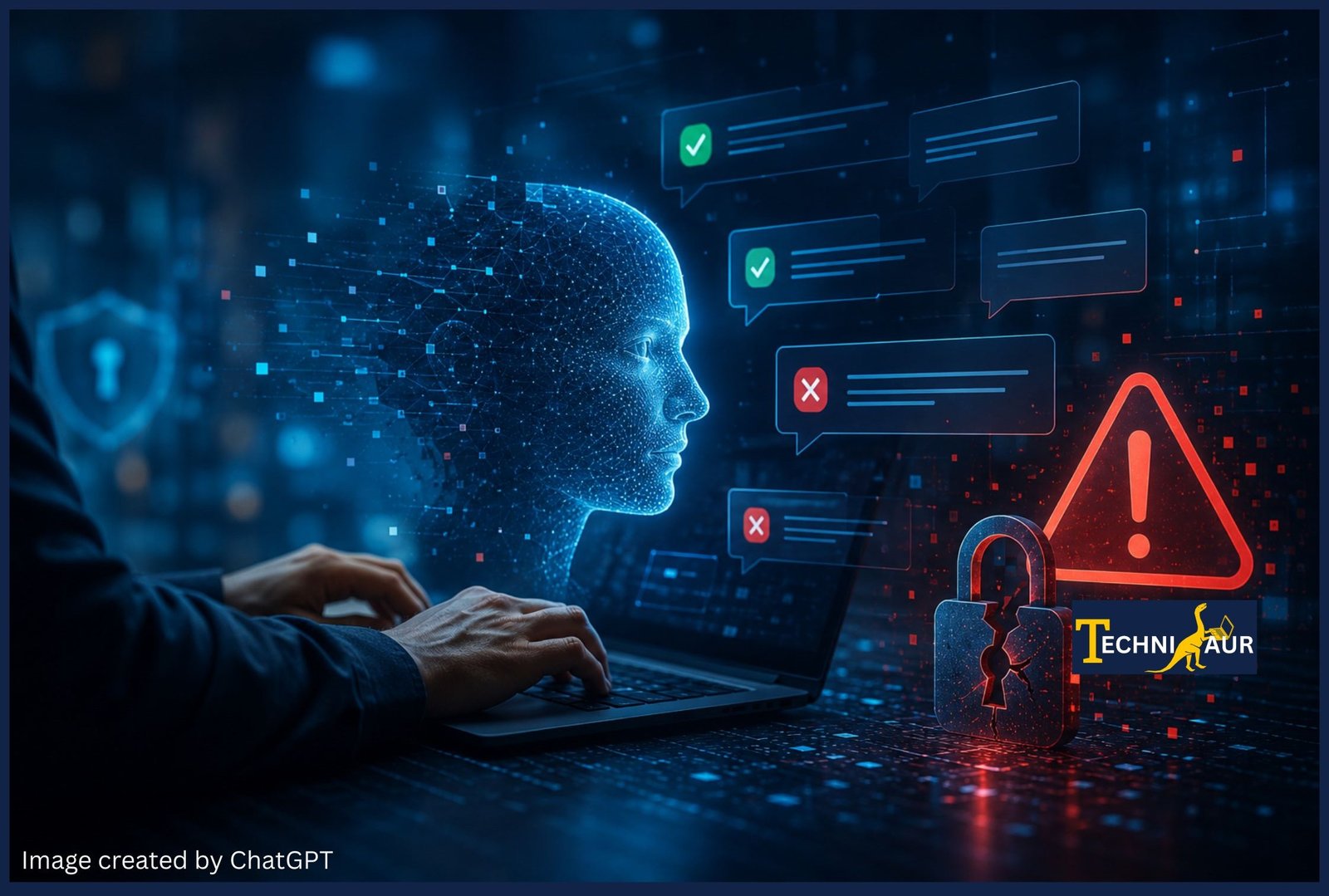
AI hallucinations occur when an AI system generates false, misleading, or entirely fabricated information while presenting it as accurate. In casual use, this may seem like a minor inconvenience. In enterprise environments, however, hallucinations can create serious cybersecurity, compliance, operational, and reputational risks.
As businesses increasingly rely on generative AI tools and AI-driven decision systems, understanding the security implications of hallucinations is becoming essential rather than optional.
What Are AI Hallucinations?
An AI hallucination is a situation in which an AI model produces outputs that appear convincing but are factually incorrect, fabricated, or logically flawed. These outputs may include:
- Invented data or statistics
- False citations or references
- Incorrect code suggestions
- Misleading cybersecurity analysis
- Fabricated customer information
- Inaccurate compliance recommendations
Large Language Models (LLMs) generate responses based on patterns learned from training data rather than true understanding or reasoning. As a result, they can sometimes “fill in gaps” with plausible-sounding but inaccurate content. The problem becomes more dangerous when users trust AI-generated outputs without verification.
Why AI Hallucinations Are Becoming a Security Concern
In corporate environments, AI systems are increasingly being used in high-responsibility workflows. Many businesses now depend on AI for:
- Threat detection
- Security automation
- Software development
- Compliance documentation
- Internal knowledge management
- Customer communication
- Data analysis
- Incident response support
When hallucinations occur within these functions, the consequences can extend far beyond simple inaccuracies.
Incorrect Security Recommendations
AI-powered cybersecurity assistants can sometimes generate misleading remediation steps or inaccurate threat assessments. A hallucinated recommendation may cause security teams to misconfigure systems, overlook vulnerabilities, or respond incorrectly during incidents.
For example, an AI tool may confidently recommend a security patch that does not actually exist or suggest disabling legitimate security controls based on incorrect assumptions.
In fast-moving security environments, even small inaccuracies can create exploitable gaps.
AI-Generated Code Vulnerabilities
One of the fastest-growing enterprise AI use cases is AI-assisted software development. Developers increasingly use generative AI tools to write, review, and optimise code. While this improves productivity, it also introduces security risks when AI-generated code contains:
- Hardcoded credentials
- Weak authentication logic
- Outdated dependencies
- Insecure APIs
- Vulnerable encryption methods
- Poor input validation
The biggest concern is that hallucinated code often appears technically correct at first glance. If developers fail to conduct proper security reviews, these vulnerabilities may enter production systems unnoticed. AI can accelerate development, but it can also accelerate insecure development if governance is weak.
Compliance and Regulatory Risks
Many organisations now use AI systems to assist with policy writing, compliance reporting, risk assessments, and documentation. Hallucinated legal references or inaccurate compliance guidance can expose businesses to regulatory penalties.
For example:
- An AI tool may reference outdated data protection laws.
- It may fabricate regulatory clauses that do not exist.
- It may generate inaccurate audit summaries.
- It may incorrectly classify sensitive data.
Industries such as healthcare, finance, government, and critical infrastructure are especially vulnerable because regulatory accuracy is essential.
As global AI regulations continue evolving, organisations cannot afford to rely blindly on unverified AI outputs.
Social Engineering and Misinformation Risks
AI hallucinations can also contribute indirectly to cybercrime and social engineering attacks. Attackers may intentionally manipulate AI systems using prompt injection techniques or adversarial inputs to produce misleading information. This can result in:
- False internal communications
- Misleading automated responses
- Fake technical guidance
- Manipulated customer interactions
In addition, hallucinated information shared publicly can damage brand credibility and spread misinformation rapidly. For organisations using AI-driven customer support systems, inaccurate responses may lead to customer distrust, reputational harm, or even legal disputes.
The Hidden Risk of Overtrusting AI
One of the most underestimated enterprise risks is excessive trust in AI-generated outputs. Because modern AI systems communicate confidently and fluently, employees may assume the information is reliable without performing verification checks. This phenomenon is becoming increasingly common in:
- Security operations centres (SOCs)
- IT helpdesks
- Development teams
- HR automation
- Compliance departments
- Customer service operations
Overreliance on AI can reduce critical thinking and weaken human oversight, particularly in high-pressure environments where speed is prioritised over validation. AI should support decision-making, not replace professional judgement.
How Businesses Can Reduce AI Hallucination Risks
While hallucinations cannot be completely eliminated, organisations can significantly reduce associated risks through strong governance and security practices.
Establish Human Verification Processes
AI-generated outputs should always be reviewed by qualified professionals before implementation, especially in:
- Cybersecurity workflows
- Software deployment
- Compliance reporting
- Legal documentation
- Customer communication
Human oversight remains one of the most effective safeguards.
Use Retrieval-Augmented Generation (RAG)
Many enterprises now use Retrieval-Augmented Generation systems that connect AI models to verified internal databases and approved documentation. This reduces the likelihood of fabricated responses by grounding outputs in trusted information sources.
Limit AI Access to Sensitive Systems
AI systems should follow the principle of least privilege. Restricting access to critical infrastructure, confidential data, and administrative controls reduces the impact of incorrect outputs or manipulated behaviour.
Conduct AI Security Audits
Regular AI security assessments can help organisations identify:
- Hallucination patterns
- Unsafe outputs
- Model vulnerabilities
- Data leakage risks
- Prompt injection weaknesses
AI governance should be integrated into existing cybersecurity frameworks rather than treated separately.
Train Employees on AI Risks
Corporate AI adoption without workforce education creates unnecessary exposure. Employees should understand:
- How hallucinations occur
- When AI outputs require verification
- Common AI security risks
- Responsible AI usage policies
Security awareness training must now include AI literacy.
The Future of AI Reliability in Enterprise Security
AI hallucinations remain one of the biggest challenges in enterprise AI adoption. Although AI models are improving rapidly, no current system is fully immune to generating inaccurate or fabricated outputs.
For businesses, the key issue is not whether hallucinations exist, but how organisations manage the risks associated with them. Companies that implement strong AI governance, human oversight, security controls, and responsible deployment strategies will be far better positioned to benefit from AI safely. Those that adopt AI blindly without verification frameworks may unintentionally introduce new vulnerabilities into their own environments.
AI is undoubtedly transforming enterprise operations, but reliability and security must evolve alongside innovation. In the coming years, organisations that balance automation with accountability will be the ones that gain long-term trust, resilience, and competitive advantage.