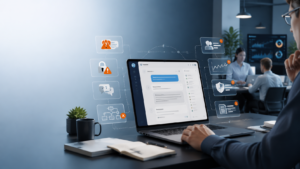
Before buying an AI security tool, enterprises must ask key vendor questions this guide helps you vet providers for safety and compliance.
AI security tools are coming to market faster than security teams can evaluate them. Every few weeks, a new platform promises “autonomous detection,” “predictive analytics,” or “behavioral modeling” that sounds almost magical. And sure some of these tools are genuinely impressive. But others? Let’s just say they’re more marketing hype than real security value.
This guide breaks down the key vendor evaluation questions you must ask, along with a compliance checklist, risk pointers, and practical advice for comparing enterprise security tools. I’ve kept the tone human, slightly conversational, and imperfect, just as you requested.
Why Key Vendor Questions Before Purchasing AI Security Tools Matter for Enterprises
AI tools today have deep access to enterprise data. They analyze logs, monitor user activity, and sometimes access privileged information to detect anomalies. That level of access is powerful and dangerous if mismanaged.
Skipping due diligence is like giving a stranger your house keys because they “seem nice.”
You wouldn’t do that. And you shouldn’t do it with AI vendors either.
A weak vendor can introduce:
- data leakage risks
- bias-driven false positives
- compliance violations
- supply-chain vulnerabilities
- unexpected external data processing
Asking the right questions upfront saves months of headaches later.
Core AI Security Tools Vendor Questions to Ask
Below are the most essential questions, the ones vendors might try to gloss over if you’re not paying attention.
1. How does the AI model collect, store, and use enterprise data?
Start here. You need transparency about data flow, storage, and usage. Ask:
- Does your model use our data for training?
- Can we opt out of shared model learning?
- Where is the data stored?
- Do you send logs to third parties?
Clear, detailed answers show maturity. Vague answers indicate risk.
2. Which compliance standards do you support?
Your vendor must fit your regulatory environment. Look for certifications such as:
- SOC 2 Type II
- ISO 27001
- GDPR
- HIPAA (if applicable)
- NIST AI RMF compliance alignment
- PCI DSS (for financial environments)
And international AI risk standards like the ISO/IEC AI standards for risk management.
If they have none, think twice.
3. Is your AI model explainable, or is it a black box?
Ask whether:
- Decisions can be explained
- Detection paths are visible
- Audit logs exist
- There’s an explainability dashboard
Explainability matters because blind trust in AI creates accountability issues.
4. What’s your accuracy and false-positive rate?
Every vendor loves to brag about accuracy, but few mention false alarms.
Ask how often the tool triggers unnecessary alerts and what methods they use to minimize noise.
False positives waste time, exhaust analysts, and hide real threats.
5. How often do you update your model?
Threats evolve daily. Ask:
- How frequently is your model retrained?
- Do updates cause downtime?
- How are new detection rules added?
Vendors should show evidence of active research and continuous improvement.
6. What integrations do you support?
AI security tools must seamlessly fit your ecosystem.
Ask whether they integrate with:
- SIEM platforms
- IAM systems
- Cloud providers
- Ticketing tools
The less integration your vendor supports, the more manual work your team will face.
7. How do you handle data residency and cross-border transfer?
Some industries legally require data to remain within national boundaries.
Ask where logs go, whether regional processing is supported, and how they comply with data transfer laws.
8. What happens to our data if we terminate the contract?
A critical but often forgotten question.
Ask for:
- Full data deletion
- A written deletion policy
- A documented offboarding procedure
A good vendor is transparent. A bad one is evasive.
9. How do you prevent model drift?
Models degrade over time due to model drift.
Ask how they monitor and mitigate drift and whether you can track it inside the platform.
10. Can you provide customer references?
Real references matter more than glossy case studies.
Ask for contacts, not just PDFs.
Vendor Security Assessment Checklist
Here’s a straightforward checklist your procurement and security teams can use.
Data Handling
- No unauthorised training on customer data
- Data encrypted at rest & in transit
- Data residency clarified
- Deletion & retention policy documented
AI Model Transparency
- Explainable decisions
- Audit logs available
- Insight into training data sources
Security Controls
- Zero-trust compatibility
- Role-based access control
- Tamper-proof log storage
Compliance
- SOC 2 Type II
- ISO 27001
- GDPR compliance
- Industry-specific standards
Performance
- False-positive metrics disclosed
- Drift monitoring
- Stress-testing results available
Integrations
- SIEMs supported
- Cloud compatibility
- API access
Business Transparency
- Clear pricing
- No hidden data usage terms
- Customer references
Additional Vendor Evaluation Questions Enterprises Forget to Ask
1. Can the tool function during cloud outages?
If everything goes down, your AI should still function at a basic level. Ask about offline or hybrid modes.
2. What’s your incident response plan?
It’s ironic, but yes, your security vendor must secure themselves too.
Ask about past breaches and how they handled them.
3. How do you ensure fairness and reduce bias?
Bias creates operational risks. Vendors should show documentation on fairness testing and diverse datasets.
4. How customizable is your system?
Rigid tools can break workflows.
Ask about rule editing, custom detections, and override options.
5. What extra charges might appear later?
Some vendors hide costs in:
- API usage
- Add-on modules
- Support tiers
- Integration fees
Transparent pricing is a sign of trust.
Building a Strong Compliance Checklist for AI Security Purchases
Your compliance checklist should include:
- Data residency validation
- Regulatory mapping (GDPR, HIPAA, PCI, etc.)
- AI governance practices
- Ethical AI review
- Auditability of all actions
- Proper access control documentation
- Vendor risk scoring
Red Flags to Watch Out For
Be cautious if you notice:
- Vague answers about data usage
- No technical documentation
- Dodging compliance questions
- “Coming soon” features that should be basic
- No public security team
- No recent audits
- Overly aggressive sales tactics
Your instincts matter. If something feels off, it probably is.
How to Compare AI Security Vendors Effectively
To avoid rushing the process:
- Shortlist vendors based on capability
- Request technical (not sales) demos
- Ask them to run through real threat scenarios
- Test integration compatibility
- Conduct a 30-day controlled trial
- Collect SOC team feedback
- Score vendors using your checklist
This ensures objective evaluation and reduces emotional decision-making.
Final Thoughts
AI security tools are incredibly powerful, but they demand high levels of trust. These tools access sensitive logs, user behavior patterns, and critical systems. That’s why vendor scrutiny should be strict, thorough, and sometimes a little uncomfortable.
If a vendor hesitates when questioned, that’s your sign.
If they welcome transparency, you’ve found a partner.
Before committing, ask yourself, “Do we trust this vendor with our most sensitive data?”
If the answer isn’t a confident yes, keep searching.
Frequently Asked Questions (FAQ)
1. Why are vendor questions so important when buying AI security tools?
Vendor questions reveal how a provider handles your data, manages compliance, and updates their AI models. Many AI tools behave like black boxes, so these questions help uncover hidden risks. Asking the right questions upfront prevents compliance issues, reduces operational surprises, and ensures your enterprise chooses a trustworthy, long-term partner.
2. What is the biggest risk of choosing the wrong AI security vendor?
The biggest risk is exposing sensitive data to a vendor that lacks proper security or compliance practices. A poorly designed AI tool may generate inaccurate detections, produce excessive false positives, or even mishandle logs. Choosing the wrong vendor can weaken your defense instead of strengthening it, leading to costly vulnerabilities.
3. How do compliance standards affect AI security purchases?
Compliance dictates how vendors store data, safeguard privacy, and document their AI processes. Enterprises must verify certifications like SOC 2 or ISO 27001 to ensure the vendor meets regulatory expectations. Failure to align with compliance can result in legal penalties, audit failures, and operational slowdowns, especially in regulated industries.
4. What should be included in a vendor security assessment?
A solid vendor assessment should evaluate data handling, model transparency, integration compatibility, access controls, and compliance readiness. It should also review the vendor’s incident response capability, independent audits, and bias-testing practices. This comprehensive view helps determine whether the vendor can securely operate within your environment.
5. How can enterprises compare AI vendors effectively?
The best approach is to shortlist vendors, request technical demos, test real threat scenarios, evaluate integrations, run a controlled trial, and use a standardized scoring checklist. Comparing vendors this way avoids emotional decision-making and ensures each candidate is judged using the same criteria, improving the reliability of your final choice.