Artificial intelligence has rewritten the rules of cybersecurity, just not in the way we hoped. Sure, AI has given organizations powerful tools to detect threats faster than ever. But it has also armed cybercriminals with smarter, more convincing, and painfully realistic attack techniques. Today’s attackers don’t just break into systems; they fool people, imitate trusted identities, and manipulate emotions.
From deepfakes to AI-powered phishing and advanced social engineering, the new threat landscape reflects how AI is transforming cybersecurity in ways that feel uncomfortably personal. And frankly, a little scary.
If you’ve ever wondered how far these modern cyber threats can go or how organizations can realistically defend themselves, this article breaks everything down in a human way. No jargon overload. Just clarity, examples, and practical guidance.
What Makes AI Security Threats So Dangerous?
Let’s be honest: traditional cyberattacks were predictable. A malicious email with terrible grammar. A clunky fake website. A suspicious phone call that didn’t feel right.
But AI changed the game.
Today’s threats:
- Learn from data.
- Mimic human communication.
- Adapt in real time.
- Sound natural, not robotic.
- Exploit emotions with frightening precision.
The unsettling part? Attackers no longer need high-level skills. They just need access to the right AI tools
built on artificial intelligence fundamentals
This is why AI security threats have become one of the fastest-growing risks in the digital world. The volume, speed, and quality of attacks keep increasing because AI works 24/7 without getting tired.
1. Deepfakes: The New Face of Deception
A decade ago, deepfakes were just a fun experiment on the internet. You might’ve seen a celebrity face swapped into a movie scene. Impressive, but harmless.
Today? A CEO can receive a video call from his “CFO” requesting an urgent transfer and lose millions. Because the face, the voice, the mannerisms… everything is digitally replicated.
What Exactly Are Deepfakes?
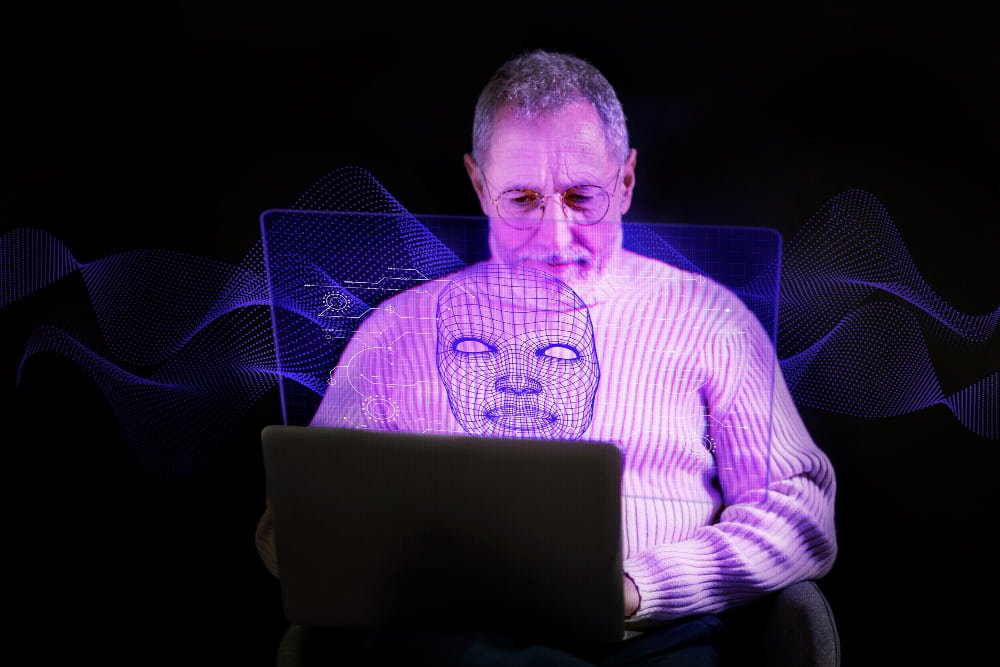
Deepfakes use AI, specifically deep learning, to create synthetic, hyper-realistic audio and video. The AI learns someone’s:
- Facial expressions
- Speech patterns
- Voice tone
- Movement
Then it recreates them so accurately that most people can’t tell the difference.
Why Deepfake Risks Are Increasing
A few reasons:
- AI tools are now cheap, easy, and readily available online.
- People post endless videos of themselves on social media, giving attackers plenty of training material.
- Deepfake-as-a-service has quietly emerged on the dark web.
- Detection technology is still behind generation technology.
That last point matters. For every new deepfake detection tool, attackers create a better generation tool. It’s a constant race.
Real-World Deepfake Incidents
To make this more human and less theoretical, here are a few unsettling examples:
- A UK-based firm lost $243,000 after an employee followed instructions from what he believed was his CEO’s voice.
- A Hong Kong company was tricked into a $25 million transfer using a deepfake video conference imitating senior executives.
- Political deepfakes continue to spread misinformation, especially near elections.
These attacks aren’t “coming” someday. They’re happening now, silently and globally.
How Organisations Can Defend Against Deepfake Threats
You can’t rely on gut instinct anymore. Deepfakes are too convincing.
Practical defense includes:
- Implementing multi-step verification for financial requests
(e.g., a second confirmation via an internal portal) - Training staff to recognise behavioural inconsistencies
- Using deepfake detection tools, though they’re not perfect
- Restricting public exposure of executive voices and videos
- Setting strict communication protocols for approvals
One of the simplest but most effective rules:
No major decisions based solely on audio or video.
2. AI-Powered Phishing: Smarter, Faster, More Believable
Phishing used to be easy to spot. Poor grammar. Suspicious links. Strange sender addresses. We’d shake our heads and delete the email.
Now? AI writes flawless emails, corrects grammar, mimics writing styles, and even adjusts tone depending on the target.
Some phishing emails today are so good that even cybersecurity professionals struggle to detect them at first glance.
How AI Has Transformed Phishing
Attackers now use AI to:
- Scrape information from social media
- Analyse previous emails from real employees
- Generate personalised messages instantly
- Clone writing style (yes, even the way someone signs off)
- Craft believable subject lines that match ongoing projects
This isn’t random spamming.
This is precision-engineered manipulation.
Examples of AI-Generated Phishing Attacks
- An email that perfectly imitates a department head asking for updated HR information
- A fake password reset request from a platform the employee genuinely uses
- A time-sensitive, well-formatted invoice that looks real
- Emails referencing internal meetings, documents, or team members
Some organizations now see AI-powered phishing attacks that feel almost… friendly. Like a coworker asking for a small favor.
And that is exactly what makes them effective.
Phishing Prevention Strategies That Actually Work
You can’t fight AI using outdated security habits. Organizations must:
- Adopt AI-driven email filtering systems
- Use URL protection gateways
- Set up domain spoofing protections (DMARC, SPF, DKIM)
- Train employees using simulated phishing tests
- Require MFA for all critical systems
But the best defense?
Teaching employees to pause.
A five-second pause to think, “Does this feel right?” can save an entire organization.
3. Social Engineering 2.0: Psychological Manipulation Powered by AI
Traditional social engineering relied on human manipulation alone.
Attackers had to:
- Call people manually
- Pretend to be someone else
- Sound convincing
- Spend hours researching targets
Now AI does all of this automatically.
Modern social engineering is not just deceptive; it’s scalable. Attackers can target hundreds of employees with personalised scripts in minutes.
How AI Strengthens Social Engineering Attacks
AI can:
- Generate believable scripts for phone scams
- Create deepfake audio for impersonation
- Predict emotional responses
- Analyse publicly available data to craft personalised lies
- Use chatbots for interactive scams
Imagine receiving a WhatsApp message from your “IT department” asking you to verify your login sent at the exact time you usually sign in. That kind of timing isn’t random. It’s calculated.
Types of AI-Driven Social Engineering Attacks
- Vishing (Voice Phishing)
Using AI-cloned voices to impersonate employees or executives. - Smishing (SMS Phishing)
Highly targeted SMS messages that appear legitimate. - Business Email Compromise
Attackers study communication patterns, then craft perfect impersonations. - Relationship-Based Attacks
AI learns personal details from social media to create emotional manipulations.
(“Hey, I saw your recent post about …. could you help me with something quickly?”) - AI-powered chatbot scams
These bots hold full conversations, making the target trust them.
Why Social Engineering Remains the Most Successful Attack Method
Because it targets the one vulnerability technology can’t fully fix yet: human psychology.
People want to help.
People get tired.
People make assumptions.
And people trust familiar names.
AI takes advantage of all of this.
4. How Organisations Can Defend Themselves Against Modern AI Threats
There’s no single tool that can eliminate all modern cyber threats. But a well-layered defence strategy can significantly reduce risk.
Here’s what actually works:
a) Invest in AI-Backed Cybersecurity Tools
If attackers use AI, defenders must too.
AI security tools can:
- Detect unusual behaviour
- Monitor login patterns
- Flag suspicious emails
- Identify abnormal transactions
- Catch deepfake inconsistencies
To effectively deploy and manage these technologies, organisations must also invest in cybersecurity training so teams understand how AI-driven defences work and how to respond to evolving threats.
b) Build a Human-Centric Security Culture
Technology alone isn’t enough. Employees need:
- Regular cyber awareness training
- Real examples of deepfake risks
- Practice identifying social engineering
- Encouragement to report suspicious activity
- Zero guilt for false alarms
Industry guidance, such as research from the European Union Agency for Cybersecurity (ENISA)
consistently shows that human awareness is critical in reducing phishing and social engineering success rates.
c) Strengthen Authentication Measures
Attackers impersonate identities. So, organizations must protect identity itself.
Strong measures include:
- Multi-factor authentication (MFA)
- Phishing-resistant passkeys
- Biometric verification
- Secure communication channels
If a hacker can’t bypass authentication, they can’t enter the system even with the most convincing deepfake.
d) Reduce Public Exposure of Executives
Limit how often senior leaders:
- Post videos online
- Share voice recordings
- Attend virtual events without security
- Use predictable communication platforms
It may feel restrictive, but it dramatically reduces deepfake fuel.
e) Prepare an Incident Response Plan
It’s not if an attack happens. It’s when.
A strong incident response plan includes:
- Immediate isolation of suspicious systems
- Communication guidelines
- Deepfake verification procedures
- Forensic investigation steps
- Post-attack analysis
When teams know what to do, panic doesn’t take over.
5. What the Future of AI Security Threats Looks Like
Let’s be brutally honest: the threat landscape will get worse before it gets better.
We’ll see:
- Deepfakes so realistic they fool biometric systems
- Highly personalised phishing that adapts during conversations
- AI chatbots impersonating coworkers seamlessly
- Social engineering campaigns that use emotional triggers based on personal data
- Attacks that target IoT devices, sensors, and even smart security systems
But there’s a positive side, too. AI will also give defenders better tools:
Smarter threat detection, stronger authentication, and automated defence mechanisms that can react faster than any human. The key is staying aware, staying disciplined, and staying curious.
Final Thoughts:
After exploring deepfake risks, AI-powered phishing, and advanced social engineering, one thing becomes crystal clear: Attackers are using AI to exploit human trust, not technical weaknesses. The tools may be modern, but the attack strategy is ancient. Manipulation. Deception. Fear. Urgency. So, while technology continues evolving, the most powerful defence will always be:
- Educated teams
- Strong policies
- Clear communication
- A culture of caution
- People who think before they click
Modern AI security threats feel overwhelming, but they’re manageable when organizations combine smart technology with smart humans.
And maybe that’s the part we often forget:
AI can imitate people, but it still can’t replace human judgment.
Frequently Asked Questions (FAQs)
1. What makes AI security threats different from traditional cyber threats?
AI security threats are faster, more adaptive, and far more convincing. Attackers use AI to mimic human behavior, personalize attacks, and automate large-scale scams. Unlike old-school attacks, these modern threats are harder to detect because they sound natural, look real, and often use data scraped from social media to target individuals.
2. Why are deepfakes becoming such a major cybersecurity risk?
Deepfakes allow attackers to impersonate executives, employees, and public figures with stunning accuracy. They can fake video calls, audio messages, and visual identity. The realism makes it extremely difficult for victims to distinguish truth from manipulation, leading to financial losses, data breaches, and reputational damage.
3. How can organizations prevent AI-powered phishing attacks?
Prevention requires a mix of technology and training. AI-based email filters, MFA, domain protection protocols, and URL scanning tools help block threats. Simultaneously, organisations need regular employee training, simulated phishing tests, and a culture that encourages workers to double-check suspicious messages without fear.
4. Why is social engineering still effective in the age of advanced cybersecurity?
Because attackers target human emotions not systems. Fear, urgency, excitement, and trust are easily exploited. Even with strong technical defenses, a single human mistake can allow attackers inside. AI strengthens social engineering by analysing personal data and generating hyper-personalised messages.
5. What long-term strategies help organizations defend against modern cyber threats?
Long-term resilience comes from layered security: AI-driven defence tools, multi-factor authentication, deepfake detection systems, executive identity protection, and strong incident response planning. But the most sustainable strategy is building a cyber-aware culture where employees stay cautious, informed, and alert.