
Artificial Intelligence (AI) has gone from buzzword to must-have skill in today’s digital economy. Whether you’re looking to pivot your career, deepen your tech expertise, or simply stay ahead in a competitive job market, taking an AI course in Sydney can be a smart move. In this post, we’ll dive into what an AI course in Sydney involves, why Sydney is an excellent city for it, what kinds of programs are available, how to pick the right one, and what your next steps might be.
Why Choose Sydney for an AI Course?
1. Thriving Tech & Innovation Ecosystem
Sydney is one of Australia’s premier tech hubs. From startups to major global firms, the city boasts a vibrant innovation scene. This means an AI course here is likely to be connected to real-world applications, industry collaborations, and practical projects.This strong ecosystem makes an artificial intelligence course in Sydney especially valuable for learners who want hands-on exposure to real-world AI use cases.
2. Access to Leading Universities and Institutions
Sydney hosts some of Australia’s top universities and training providers offering AI-related study programs. For example, the University of Sydney offers short courses in both AI and Data, both online and in person. Sydney Short Courses and the University of Technology Sydney (UTS) provide a Bachelor of Artificial Intelligence degree that covers deep learning, reinforcement learning, computer vision,, and more. University of Technology Sydney
3. Demand for AI Skills
Australia has recognized a growing shortage of AI and data skills; training initiatives are ramping up to meet demand. The Australian Choosing to study in Sydney positions you well for employment and possibly industry placements or internships.
4. Diverse Program Options & Modes
Sydney’s educational providers offer everything from micro-skills to full-degree programs, delivered in-person, blended, or online—so whether you’re working already or coming from another country, you’ll find flexibility.
What Types of Artificial Intelligence Courses Are Available in Sydney?
When we say “AI course,” it can mean many different things. Here’s a breakdown of the kinds of programs you’ll find, from short to long-form and from non-technical to very technical.
Short/Introductory Courses
- Example: The microskill “Introduction to Artificial Intelligence” offered by TAFE NSW. This is non-technical, for people with no prior programming experience, and aims to help you understand how machines learn from data and common applications of AI. TAFE NSW Store
- Example: Professional development short courses at the University of Sydney’s Centre for Continuing Education. They cover AI & machine learning, programming generative AI, and using tools like ChatGPT and Microsoft Copilot. Centre for Continuing Education
These are great if you’re exploring AI or want to upskill without committing many years.
Undergraduate Degrees
- Example: Bachelor of Artificial Intelligence at UTS. Covers how to design, build, and evaluate AI solutions; topics include deep learning, reinforcement learning, computer vision, NLP, mathematics, statistics, and software development. University of Technology Sydney
- Example: At Macquarie University, there is a specialization in Applied Artificial Intelligence for students who already have an undergraduate qualification. Macquarie University
These are suited if you’re new to the field and want a full foundational education.
Postgraduate/Advanced Degrees
- Example: The Master’s program in Artificial Intelligence at Western Sydney University (WSU). It explores foundational to state-of-the-art topics in AI, and looks at applications as well as technical depth. Western Sydney University: Home
This is ideal if you already have some prior study or experience and want to specialize or move into research/leadership roles.
What Content Should You Expect in an AI Course?
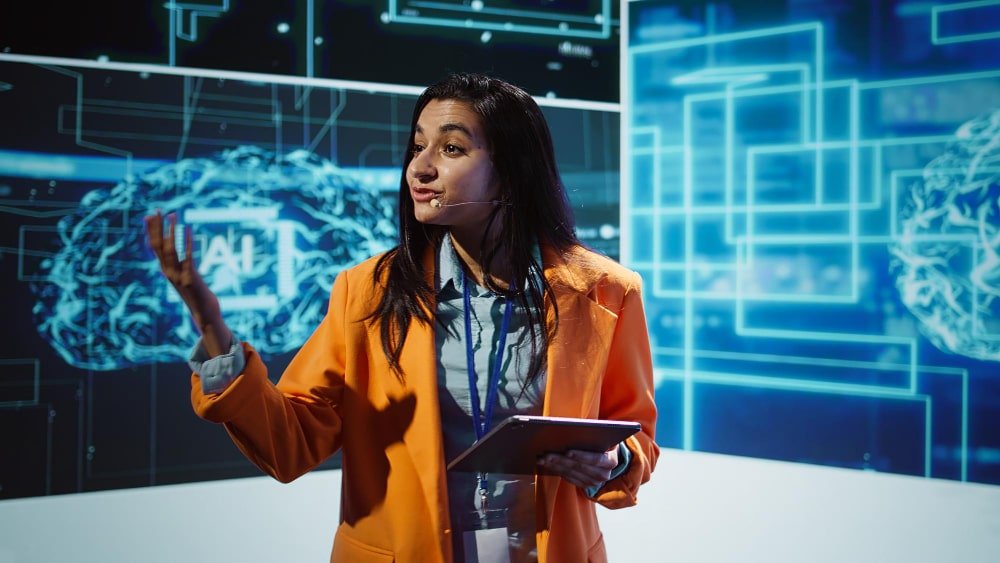
Depending on the level of the course (intro vs degree), the content will vary, but there are common elements you should look out for. These give you an idea of what you’ll learn—and help you evaluate courses.
Core Topics
- Fundamentals of AI: definitions, history, capabilities, and limitations.
- Machine Learning (ML): supervised & unsupervised learning, algorithms (e.g., decision trees, SVMs, k-means).
- Deep Learning: neural networks, convolutional neural networks (CNNs), and recurrent networks (RNNs).
- Reinforcement Learning: agents, reward functions, and policy learning.
- Computer Vision: image analysis, object detection.
- Natural Language Processing (NLP): text analysis, sentiment analysis, and transformer models.
- Programming/Software: Python, R, libraries like TensorFlow and PyTorch.
- Mathematics & Statistics: linear algebra, probability, and statistics are essential underpinnings for AI. (In degree programmes)
- Ethics, Privacy & Security in AI: moral implications, bias, and regulation. This is increasingly emphasized.
- Real-world Applications: autonomous systems, recommendation engines, personalized learning, healthcare, and finance. For example, UTS mentions personalized learning, voice assistants, and autonomous cars. University of Technology Sydney
Skills You’ll Gain
- Ability to define an AI problem, scope it, and select an appropriate algorithm or tool.
- Hands-on experience building, training, and evaluating AI models.
- Use of AI tools in business or research contexts, especially for professional or short courses.
- Critical thinking about how AI is used and its implications for industry and society.
- For advanced programs: possibly research skills, publishing, or thesis work.
How to Choose the Right AI Course for You
With so many options, choosing the “right” course requires a bit of reflection. Here are key questions and criteria you should use.
1. What is your starting point?
- Do you have no programming or technical background? Then choose an intro/micro‐skill course (e.g., TAFE NSW microskill) that requires few prerequisites. TAFE NSW Store
- Are you somewhat technical or already in IT? Perhaps a full undergraduate degree or specialization makes sense.
- Are you already degree qualified and want to specialize or move into leadership/research? Then a postgraduate program is better.
2. What is your goal?
- Are you looking to upskill or pivot into AI?
- Are you looking to become a practitioner, researcher, or AI manager?
- Do you want it for business applications (e.g., “AI for business” workshop) or for deep technical capability?
3. What is the mode & duration?
- Short courses can be hours/days/weeks, often part-time or online.
- Degrees may take 1–4 years full-time (or part-time longer).
- Consider flexible options if you’re working or living overseas.
4. Technical vs Non-technical content
- If you’re not comfortable with programming and math, avoid jumping into a highly technical master’s right away. Start with something more accessible.
- Check prerequisites: e.g., programming knowledge, mathematics, and statistics.
5. Accreditation, recognition & industry connections
- Ensure the university or provider is reputable.
- Look for programs with strong industry links, internships, projects, or real-world case studies. This improves employment prospects. For example, Torrens University Australia states its AI courses are “industry-relevant” and taught by leading AI experts. Torrens University Australia
- For overseas students: check visa eligibility issues, recognition for migration, etc.
6. Cost & Funding
- Undergraduate degrees are more costly (tuition fees + living expenses).
- Short courses are more affordable and carry less risk.
- Explore scholarships, grants, or employer support.
- Consider ROI: will the qualification improve your job prospects or pay?
7. Location vs Online
- Sydney gives you a physical campus environment, networking opportunities, and local industry engagements.
- Online/remote options may give you more flexibility, lower cost, and the ability to study from anywhere (including Pakistan).
- Even if online, check if the degree is offered by a Sydney-based institution (possibly strong reputation).
Top AI Course Examples in Sydney (and what they offer)
Here are three concrete examples of AI-related courses in Sydney along with their features.
1. University of Technology Sydney – Bachelor of Artificial Intelligence
- Description: Learn skills to design, build, and evaluate AI solutions in a range of applications. University of Technology Sydney
- Content: Deep learning, reinforcement learning, image processing, computer vision, natural language processing.
- Strong foundation in mathematics, statistics, IT & software development.
- Ideal: Students who want a full undergraduate pathway into AI.
2. Western Sydney University – Master of Artificial Intelligence
- Description: “Broad range of AI topics ranging from foundations to state-of-the-art technologies and applications.” Western Sydney University: Home
- Ideal: People with prior study who wish to specialise or lead in AI.
- Emphasis on both technical depth and applications.
3. TAFE NSW – “Introduction to Artificial Intelligence” Microskill
- Description: A gentle, non-technical introduction to how machines learn from data and common use cases; no programming required. TAFE NSW Store
- Ideal: Beginners, working professionals who want to understand AI’s business implications, or people considering further study.
The Student Experience in Sydney: What to Expect
Campus Life & Culture
Studying in Sydney means you’ll be immersed in a cosmopolitan student environment with peers from many countries, plenty of social and networking opportunities, and a lifestyle that balances study with exploration of the city.
Industry & Work Opportunities
Given Sydney’s tech ecosystem, you’ll find chances for internships, industry projects, guest lectures from practitioners, hackathons, etc. This real-world exposure matters when you wish to turn study into a career.
Support Services
Look for student support: career services, mentorship, workshops, labs, and communities (AI clubs, meet-ups). These enhance learning beyond the classroom.
Living & Cost
Sydney is relatively expensive; living costs, accommodation, and transport all factor in. If you’re coming from overseas (e.g., Pakistan), you’ll want to plan for budget, visa, health insurance, etc. On the flip side, the investment may pay off with better job opportunities.
What Career Pathways Can an AI Course Unlock?
Completing a quality AI course in Sydney can open multiple career directions. Here are some of them.
Technical Roles
- AI/Machine Learning Engineer
- Data Scientist
Many AI roles, especially Data Scientist positions, also require strong data analytics skills to interpret models, validate insights, and support business decision-making. - Computer Vision Engineer
- NLP Engineer
- Robotics/Autonomous Systems Engineer
Hybrid/Business-Tech Roles
- AI Solutions Architect
- Business Intelligence Manager (with AI/ML focus)
- Product Manager (AI-enabled products)
- AI Consultant
Leadership, Research & Specialist Roles
- AI Researcher (if moving towards PHD)
- Director of AI/Analytics
- Ethics & AI Governance Lead
- AI Strategy Lead
Given the growing demand for AI skills globally and in Australia, investing in such a qualification can have strong future returns. arXiv+1
Challenges & Considerations: What to Be Aware Of
While the opportunity is strong, there are factors you should be mindful of:
Technical Rigor
Degrees will demand strong math, programming, and analytic skills. If you’re entering without that background, you’ll need to commit extra effort to bridge gaps.
Rapidly Changing Field
AI evolves quickly tools, frameworks, best practices, and ethics change fast. Choose courses that emphasize up-to-date content, flexibility, and media-agnostic skills (not just a single tool).
Cost & Time Investment
Degrees cost significant time and money. Ensure you’re clear why you are doing it, what you want out of it, and whether you’ll achieve it.
Ethical & Societal Impact
AI raises issues of bias, privacy, job disruption, and more. Being aware and trained in ethics will be increasingly important not only technically but socially.
Global Competition
Many students from around the world are studying AI. To stand out, you’ll need to show real projects, possibly industry experience, or strong portfolio work.
From Sydney to Overseas
If you’re located outside Australia (e.g., Pakistan), consider whether you will study remotely, relocate, handle visa issues, manage time zones, and integrate into the local job market.
Steps to Get Started: Your Roadmap
Here’s a practical roadmap you can follow to choose and enroll in an AI course in Sydney.
Step 1: Self-Assessment
- What is your current knowledge (programming, math, statistics)?
- What is your goal (job change, upskill, research)?
- What resources do you have (time, budget, ability to relocate or study online)?
Step 2: Filter Options
- Shortlist 2-3 courses based on level, cost, duration, mode (online/in-person) and provider reputation.
- Use criteria: prerequisite requirements, curriculum (tech vs business focus), and industry links.
- For Example: If you’re a beginner in tech, the TAFE NSW microskill “Introduction to Artificial Intelligence” is a low-risk starting point. TAFE NSW Store
Step 3: Deep Dive into Course Info
- Visit the provider’s website: check modules, electives, project work, and assessment methods.
- Look for student support, internship, or industry project opportunities.
- Ask about recognition for overseas students if you’re abroad: does it count for migration or job purposes?
Step 4: Plan Finances & Logistics
- Tuition fees and living expenses (if relocating).
- Scholarships, employer support, and loan options.
- Visa & accommodation for international students (if applicable).
- Time-zone compatibility and online course access (if remote).
Step 5: Prepare for Enrolment
- Meet prerequisites: sometimes you need prior study in computers, mathematics, or equivalent.
- Get your application documents ready: transcripts, reference letters, and personal statement.
- If relocating: plan living arrangements, health insurance, and arrival relief.
Step 6: Build Foundation Skills
While you’re applying or waiting to enroll, build up supporting skills to hit the ground running:
- Learn Python basics (common in AI work).
- Refresh math/statistics fundamentals: linear algebra, probability.
- Explore free AI/Machine Learning modules (e.g., MOOCs).
- Work on a small personal project or data set to show interest and initiative.
Step 7: Engage & Network Early
- Join AI meetups in Sydney or online.
- Follow local tech/AI organizations in Sydney.
- Connect with current students or alumni of the program you’re considering.
- Build a small portfolio: e.g., a blog post on AI, a GitHub repository, and Kaggle participation.
Why This Matters for You (Especially if You’re Studying or Working Internationally)
Since you (Alex) are working as a content writer and learning new skills, here’s how choosing an AI course in Sydney could fit into your journey:
- Skill diversification: AI is a transformative domain. Even if you continue as a content writer, having competence in AI could open up roles like AI-enabled content strategy, data storytelling, AI ethics communication, or tech-adjacent roles.
- Global mobility: Studying in Sydney gives you an internationally recognized credential, exposure to an English-speaking tech ecosystem, and a global perspective.
- Bridging backgrounds: If your background isn’t deeply technical yet, you can start with short/intro courses, build up, and then decide whether you want to deepen.
- Content skill + AI knowledge = edge: Many AI courses emphasize communication of technical ideas, ethics, and applied use. With your writing skills and AI understanding, you may be able to carve a niche, e.g., tech communicator, policy analyst, or AI content strategist.
- Flexible path: Many courses now offer online delivery and blended options so even if you stay in Pakistan initially, you could start with online modules and later decide to relocate or upgrade.
Final Thoughts
Choosing an AI course in Sydney offers a compelling blend of top-quality education, access to industry, global recognition, and flexibility. However, it’s important to approach it deliberately: assess your starting point, pick the right level, prepare for the technical demands, and align it with your career goals. For you, Alex, as a content writer and a learner with an interest in branching into new skills, this could be a powerful next step. Whether you start small with a short AI course or aim for a larger credential, you’ll be positioning yourself for a future where AI intersects with many domains, including writing, content strategy, tech communication, and more. If you like, I can research and compare 5 specific AI courses in Sydney with a full cost breakdown, entry requirements, mode (online/in-person), and how they fit different learner profiles (beginners, intermediate, advanced). Would you like me to pull that together?
Frequently Asked Questions (FAQ)
1: Do I need programming experience to study AI in Sydney?
It depends on the course. Short/intro courses often do not require programming (like TAFE NSW’s “Introduction to AI” course).TAFE NSW Store for undergraduate/master’s degrees yes, you’ll need at least some programming background or willingness to learn.
2: Can I study online instead of relocating to Sydney?
Many providers in Sydney now offer online or blended learning modes. For example, the University of Sydney offers short courses online and in person. Sydney Short Courses+1 Still, check whether the exact degree you want has full online delivery if you cannot relocate.
Q: Do I need programming experience to study AI in Sydney?
A: It depends on the course. Short/intro courses often do not require programming (like TAFE NSW’s “Introduction to AI” course). TAFE NSW Store for undergraduate/master’s degrees yes, you’ll need at least some programming background or willingness to learn.
Q: Can I study online instead of relocating to Sydney?
A: Many providers in Sydney now offer online or blended learning modes. For example, the University of Sydney offers short courses online and in person. Sydney Short Courses+1 Still, check whether the exact degree you want has full online delivery if you cannot relocate.
Q: What about cost and student visas for international students?
A: If you’re coming from overseas, you’ll need to check tuition fees (which vary significantly), living costs in Sydney, and student visa requirements. Also factor in whether the credential will be recognized in your home country or region if you plan to return.
Q: How long do AI degrees take?
A: Undergraduate degrees (Bachelor’s) typically take 3-4 years full-time in Australia. Master’s degrees typically 1-2 years full-time, depending on prior study/part-time option.
Q: What if I’m not sure I want to do a full degree yet?
A: Then start with a short course/microskill. It’s lower risk, teaches fundamentals, and helps you evaluate if you like the subject. From there, you can transition into a degree.
Q: Will this help me get a job?
A: Yes, quality AI courses with practical experience and industry links improve your job prospects. But you’ll also need to build portfolios, practical skills, and possibly internships. Australia is actively trying to bridge AI skills gaps, meaning demand is there. The Australian+1skills,